

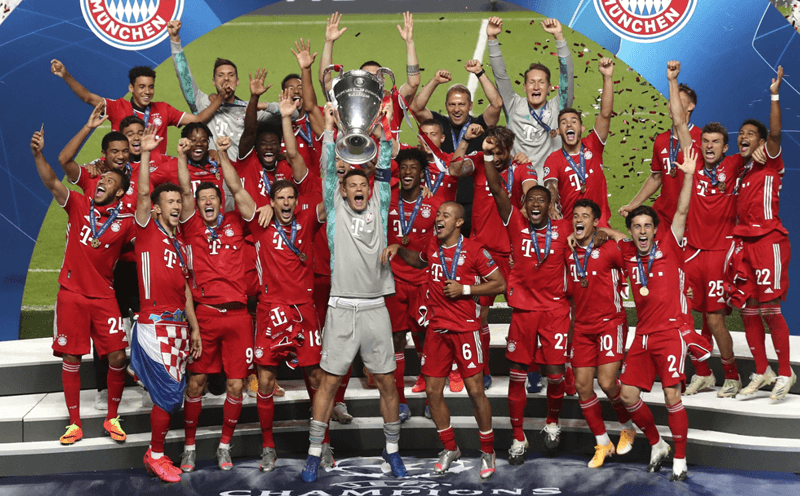
On the world football map, few clubs have maintained such enduring dominance and struck fear into opponents like the German giant – Bayern Munich. Not only does the club attract fans with its explosive attacking style and impressive collection of trophies, but it also possesses nicknames deeply rooted in culture and history.
So, exactly what is Bayern Munich’s nickname, where did these names originate, and what do they reveal about the club’s identity? Let’s travel back through history to fully uncover this appeal while following Xoilac 365.
What is Bayern Munich’s nickname? Exploring the iconic names
When referring to the most successful club in Germany, global media and fans often use several distinctive names. Each nickname is associated with a particular period in the club’s history or reflects one of its unique characteristics.
Die Bayern (The Bavarians)
This is the original and most widely used nickname in Germany. “Die Bayern” simply means “The Bavarians,” expressing the deep regional pride of Bavaria, the largest state in southern Germany. The name confirms the club’s origins and serves as a spiritual symbol representing Bavarian culture and people.
Die Roten (The Reds)
Just as Liverpool are nicknamed “The Reds,” Bayern Munich are affectionately known by local supporters as “Die Roten” (The Reds). The traditional red combined with white represents passion, youth, and an unwavering fighting spirit on the pitch.
FC Hollywood
This is a particularly interesting nickname that emerged during the 1990s. At the time, Bayern Munich had a host of major stars with strong personalities, including Lothar Matthäus, Jürgen Klinsmann, and Stefan Effenberg. Private-life dramas, arguments in the media, and the team’s inconsistent form made them seem more like a group of Hollywood actors than a football club. Although the nickname carried a somewhat mocking tone from the media, it also highlighted Bayern’s enormous media presence.
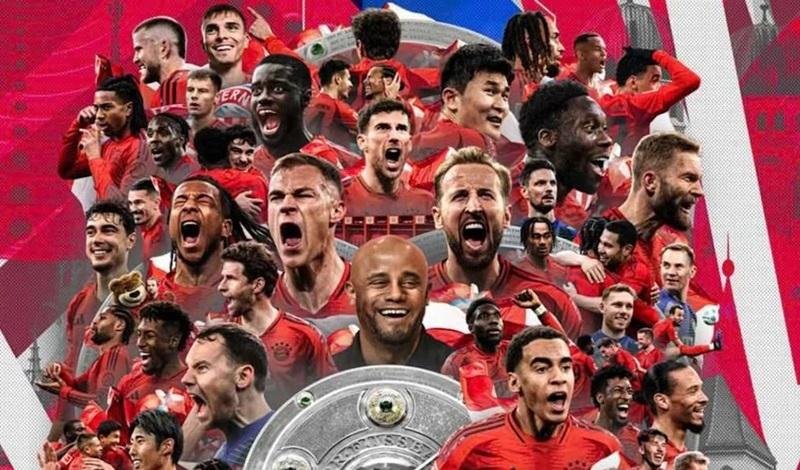
The nickname “The Bavarian Giant” represents the power of an unstoppable beast.
“The Bavarian Giant” – A nickname that has stood the test of time in Vietnam
In Vietnam, when asked what is Bayern Munich’s nickname, 99% of fans would immediately answer: The Bavarian Giant.
This powerful nickname is not an official German name but was favored by Vietnamese sports media and given to the club during the 1970s and 1980s. At that time, Bayern Munich possessed a golden generation featuring the “Emperor” Franz Beckenbauer, the “Killer” Gerd Müller, and goalkeeper Sepp Maier. They swept aside opponents across competitions, winning three consecutive European Cup titles from 1974 to 1976 with the power of an unstoppable force.
The image of a powerful gray tiger stalking its prey and coldly finishing off opponents became a perfect symbol of the resilience of German football. Whenever the Bavarian giant takes to the European stage, the atmosphere in the stands and on the Xoilac TV channel erupts with excitement among a huge audience.
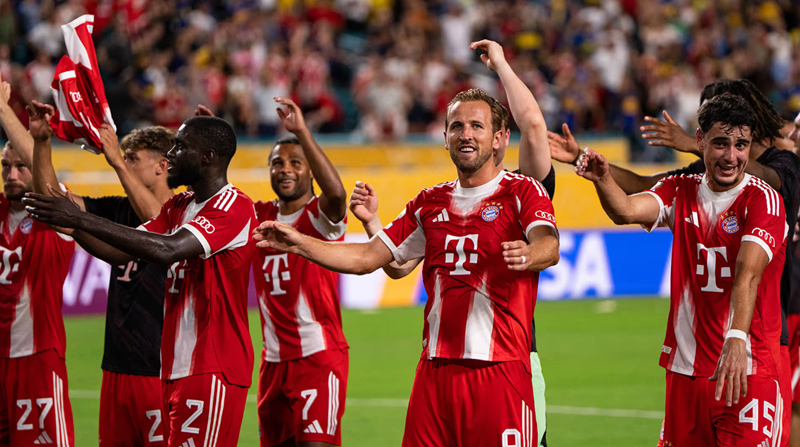
The “Mia san Mia” philosophy is the guiding principle behind Bayern Munich’s winning DNA.
The “Mia san Mia” philosophy and its influence on European football
Behind these famous nicknames lies a philosophy of life, a famous motto deeply embedded in every player who wears the red shirt: “Mia san Mia” (in Bavarian: We are who we are).
This slogan represents pride, resilience, and absolute confidence in one’s own strength. No matter who the opponent is or how difficult the situation becomes, Bayern Munich always maintains its identity and plays with the mentality of the stronger side.
Impact on the balance of European competitions
The Bavarian giant’s dominance is not limited to the Bundesliga but also strikes fear into major clubs across Europe. When comparing Bayern’s consistency with the forces from Italy’s top division, Serie A, viewers following the bảng xếp hạng bóng đá Italia section can see a clear contrast.
While Serie A giants such as Juventus, Inter Milan, and AC Milan have frequently experienced periods of ups and downs, with constant changes in the bảng xếp hạng bóng đá Italia due to financial crises or changes in club leadership, Bayern Munich have maintained a “steel” financial structure and remarkable consistency in winning titles over several decades.
It is precisely this discipline and the “Mia san Mia” identity that have allowed Bayern Munich to remain firmly positioned alongside Real Madrid and Barcelona at the top of European football. Fans can easily keep track of Bayern’s form and quickly check the latest developments on the bảng xếp hạng bóng đá Italia when accessing Xôi Lạc 365.
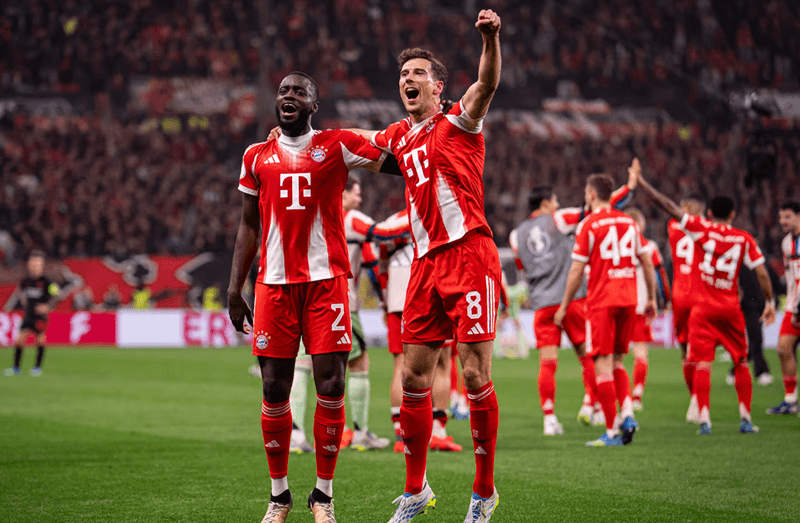
Bayern Munich maintains outstanding consistency when competing with Europe’s biggest clubs.
Experience top-level football with Xoilac TV
To fully enjoy the explosive performances of the Bavarian giant and immerse yourself in the exciting atmosphere of the world’s leading competitions, choosing a quality viewing platform is extremely important.
Supporting the football passion of Vietnamese audiences, Xoi Lac TV proudly provides a complete sports entertainment experience:
- Smooth image quality: High transmission speeds and sharp HD-quality images ensure you do not miss any outstanding moments from the world’s superstars.
- Inspirational commentary team: In-depth, humorous, and tactically knowledgeable analysis from Xôi Lạc TV adds passion and excitement to every match.
- Comprehensive data updates: Easily follow match schedules and live results while quickly checking team standings on the bảng xếp hạng bóng đá Italia, Premier League, La Liga, and Champions League.
Conclusion
Through this article, you should now have a clear understanding of what is Bayern Munich’s nickname – from regional names such as Die Bayern and Die Roten to the powerful and iconic “Bavarian Giant.” Each name represents a piece of the identity of one of the greatest winning machines in football history.
Continue nurturing your passion for the beautiful game, follow the historic journey of the Bavarian giant, and don’t forget to choose Xoilac Tivi as your trusted companion throughout every football season!

