

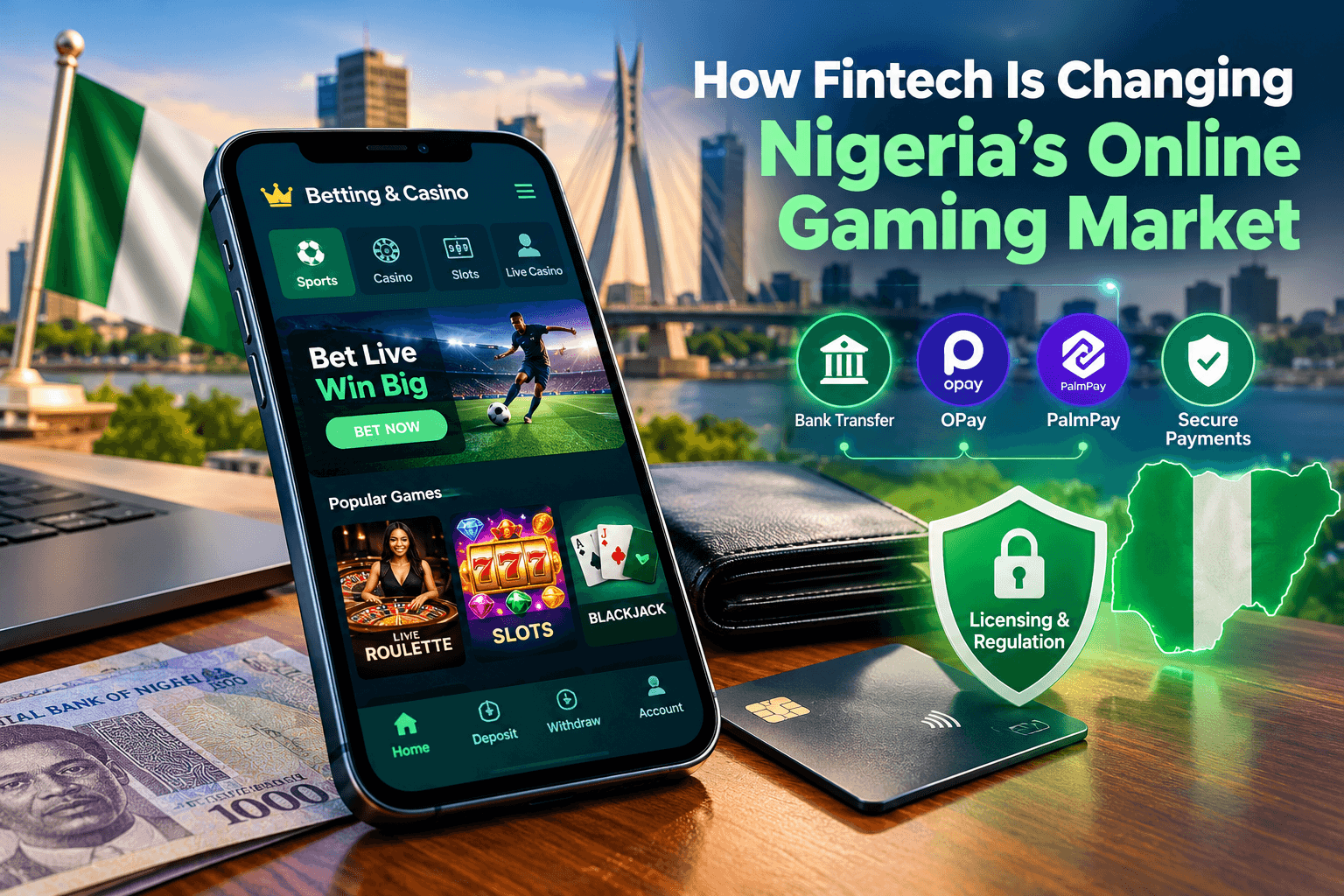
Nigeria’s gaming market is increasingly being shaped by the same forces changing the rest of its digital economy – smartphones, instant payments, identity technology and tighter compliance.
Sports betting remains the most visible part of the sector, while online casino products are becoming easier to access through the same mobile platforms.
The bigger shift, however, is happening behind the screen. In 2026, payment speed, withdrawal reliability and regulatory trust are becoming as important to users as odds, games and bonuses.
Nigeria’s Gaming Economy Is Becoming a Fintech Story
The Central Bank of Nigeria’s 2026 Fintech Report shows how quickly the country’s payment infrastructure has scaled. Nearly 11 billion transactions passed through NIBSS Instant Payments in 2024, up from about five billion in 2022.
In June 2026, the CBN also launched Payments System Vision 2028, built around interoperability, security, inclusion, innovation, trust and collaboration.
For betting and casino operators, this matters because gambling platforms no longer sit outside everyday financial behaviour. They use the same bank transfers, payment gateways and mobile-first habits that Nigerians already rely on for shopping, bills and peer-to-peer payments.
Instant Payments Are Changing Online Betting in Nigeria
Bank Transfers and Mobile Wallets Reduce Deposit Friction
A bettor who can move money between bank accounts in seconds expects a similar experience when funding a sportsbook.
Bank transfers, cards and locally familiar wallets such as OPay and PalmPay have therefore become part of the competitive landscape, not merely cashier options.
This also changes how people choose operators. Instead of looking only at a headline bonus, users can compare deposit methods, app performance, withdrawal rules and local availability.
For readers who want to compare these factors across operators, resources that compare betting sites in Nigeria can help organise the differences in one place.
Faster Withdrawals Turn Payment Reliability Into Trust
Deposits create access, but withdrawals create confidence. A fast deposit followed by an unclear payout process can damage trust immediately. That is why payment reliability is becoming part of the product itself – alongside odds, markets and game selection.
The strongest fintech advantage is therefore not simply speed. It is predictable movement of money, clear transaction status and fewer points where a user is left wondering what happened to a payment.
Smartphones Are Bringing Sportsbooks and Online Casinos Into One Journey
The smartphone has replaced much of the physical infrastructure once required to place a bet. One device can now handle registration, identity checks, deposits, live betting, casino games and withdrawals.
That convergence matters in Nigeria because sports betting and casino products increasingly share the same account, wallet and mobile interface.
Football may still be the main entry point for many users, but the digital journey can extend into slots, live casino or other games without a visit to a physical venue.
Fintech makes that cross-product experience possible by keeping payments and account access inside one mobile flow.
Gambling Regulation in Nigeria Is Moving Closer to the User
Nigeria’s legal framework changed significantly after the Supreme Court ruled on 22 November 2024 that the National Assembly could not regulate lottery and gaming across the 36 states.
In practice, state authorities now play the central licensing role outside the Federal Capital Territory. Lagos, for example, regulates online sports betting and online casino activity through the Lagos State Lotteries and Gaming Authority.
A group of state regulators has also developed the FSGRN reciprocity framework, including the Universal Reciprocity Certificate for specified online gaming activities across participating states.
It should not be treated as a single nationwide licence – its effect depends on the states participating in the framework.
For users, the practical point is simpler: licensing, KYC, age controls and responsible-gambling measures now matter more when assessing a platform. Lagos explicitly prohibits gambling by people under 18.
In September 2026, FATF also warned that fast, cross-border and multi-payment gambling systems can be exploited by illegal operators and financial criminals, making identity and transaction controls increasingly important.
The Next Phase of Nigeria’s Online Gaming Market Will Be Built on Trust
The clearest pattern in 2026 is a three-layer market: access through smartphones and payment rails, experience through fast deposits and withdrawals, and assurance through licensing, KYC and consumer protection.
Fintech has already made online betting and casino gaming easier to reach. The next competitive advantage will be harder to build – consistent payments, transparent rules, secure identity checks and a regulatory status users can verify.
For Nigeria’s gaming economy, growth is increasingly a technology story, but sustainable growth will depend on whether that technology earns trust.

