

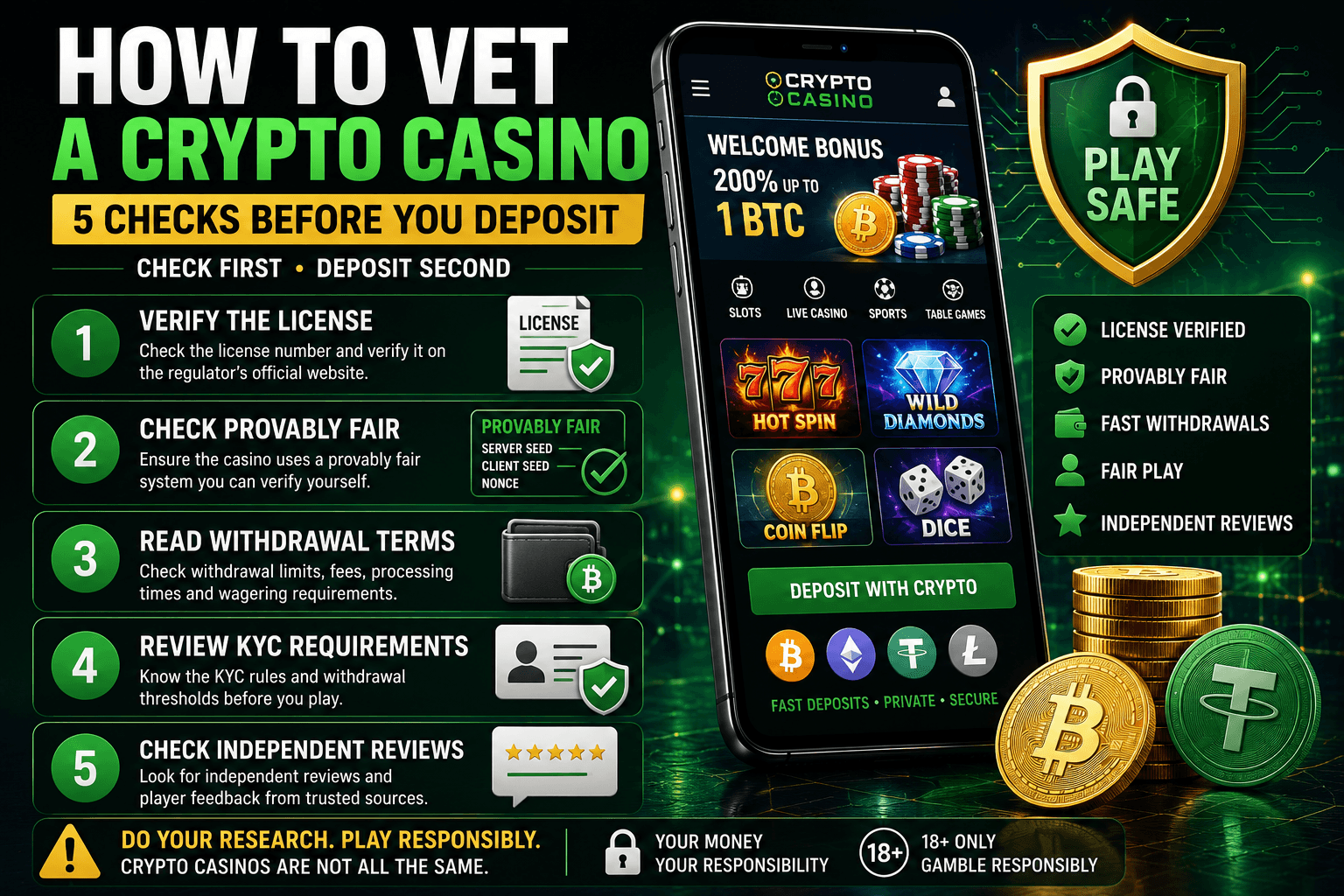
If you’ve spent any time placing bets with Bitcoin or USDT, you already know crypto casinos move differently than the traditional online sportsbooks and slots sites you grew up with.
Deposits clear in minutes, withdrawals don’t require three days of “processing,” and a lot of platforms let you play without handing over a scan of your driver’s license.
That freedom is exactly why so many bettors are drawn in and exactly why it pays to slow down before you fund an account.
Why Crypto Casinos Appeal to Sports Bettors
Speed and Privacy
Anyone who’s waited out a bank transfer knows the appeal here isn’t complicated.
Crypto transactions settle on-chain, not through a payment processor’s business hours, so cashouts that would take days at a legacy sportsbook can land in your wallet before your coffee gets cold.
Privacy is the other draw you’re not feeding a casino your full financial history just to place a bet.
The Trade-Off: Limited Oversight
Here’s the part that gets glossed over: most crypto casinos serving U.S. players hold licenses from jurisdictions like Curaçao rather than a U.S. state gaming commission.
That’s not automatically a dealbreaker, but it does mean the player protections you’d expect from a state-regulated operator — mandatory self-exclusion tools, dispute arbitration, audited payout rates aren’t guaranteed.
Organizations like the National Council on Problem Gambling run independent reviews of internet gambling operators through their compliance assessment program specifically because so much of this industry operates outside standard regulatory reach.
Checking whether an operator has been through that kind of independent review is a quick way to separate the serious platforms from the fly-by-night ones.
What to Check Before You Sign Up
Licensing and Jurisdiction
Look for the license number in the site footer and actually verify it against the regulator’s public registry — not every casino that claims a Curaçao license actually holds one in good standing.
Provably Fair Systems
A legitimate crypto casino should let you verify game outcomes yourself. The mechanics vary by platform, but the principle is the same: a server seed, a client seed, and a nonce combine into a hash you can check against what was published before the round started.
If a site can’t explain its fairness mechanism in plain language, that’s a red flag worth taking seriously.
Withdrawal Terms
Read the fine print on withdrawal limits and wagering requirements attached to bonuses before you deposit, not after you’ve won something and can’t get it out.
Where to Start Your Search
Rather than testing platforms one by one with real money, it’s worth starting from a vetted shortlist.
CCN maintains an updated roundup of the best crypto casinos, ranked with licensing, game selection, and payout speed factored in a reasonable starting point before you commit funds anywhere.
Building Smart Habits Beyond the Casino Floor
Choosing a legitimate platform is only half the equation. Bankroll discipline matters just as much with crypto as it does with any sportsbook wager.
Stakegains’ own guide to crypto casino strategies for beginners walks through bankroll management and bonus evaluation in more depth if you’re building these habits from scratch.
Frequently Asked Questions
Are crypto casinos legal in the U.S.?
It depends on your state and the operator’s licensing. Most crypto casinos serving U.S. players operate offshore and aren’t licensed by a U.S. state gaming authority, which is a legal gray area rather than a clear yes or no.
Is my money safer in a crypto casino than a traditional one?
Not inherently. Blockchain transactions are transparent and hard to reverse, but that cuts both ways — there’s no chargeback if something goes wrong, so the operator’s legitimacy matters more, not less.
What does “provably fair” actually mean?
It means you can mathematically verify that a game’s outcome wasn’t altered after you placed your bet, using cryptographic hashes the casino publishes before and after each round.
Do I need to complete KYC to play?
Many crypto casinos offer no-KYC play up to certain withdrawal thresholds, but larger cashouts typically trigger identity verification even on “anonymous” platforms.
How do I know if a crypto casino is trustworthy?
Check for a verifiable license, a working provably fair system, transparent withdrawal terms, and whether the operator has been reviewed against independent standards like those from the National Council on Problem Gambling.
Conclusion
Crypto casinos offer real advantages, speed, privacy, and lower friction but those advantages come with a smaller safety net than you’d get from a regulated sportsbook.
A few minutes of due diligence on licensing, fairness mechanisms, and withdrawal terms goes a long way toward making sure your next deposit lands somewhere legitimate.

