

Cashing out a big win is the moment every player looks forward to, but large payouts rarely land in your wallet without a few extra checks first.
Anyone who has spent time at a Pinco, one of the region’s more popular platforms for online play, knows that a smooth cash-out depends less on luck and more on preparation, since verified documents and a consistent playing history matter as much as the win itself.
Operators sit at the intersection of entertainment and financial services, so once withdrawal amounts climb past a certain point, anti-money-laundering rules kick in alongside the platform’s own risk controls.
This guide walks through why verification exists, what it typically involves, and how limits are usually structured for high-value payouts.
Why Platforms Require Account Verification for Large Withdrawals
Before large winnings can move from an operator’s system into a personal bank account or e-wallet, most licensed platforms run a round of checks that go well beyond a simple email confirmation.
A report from the European Gaming and Betting Association found that in several EU jurisdictions identity checks are specifically triggered by anti-money-laundering rules rather than at registration alone, which is why verification can resurface later once a withdrawal crosses a certain size.
For everyday players this rarely feels intrusive, since the checks mostly surface only once a cash-out crosses a meaningful threshold.
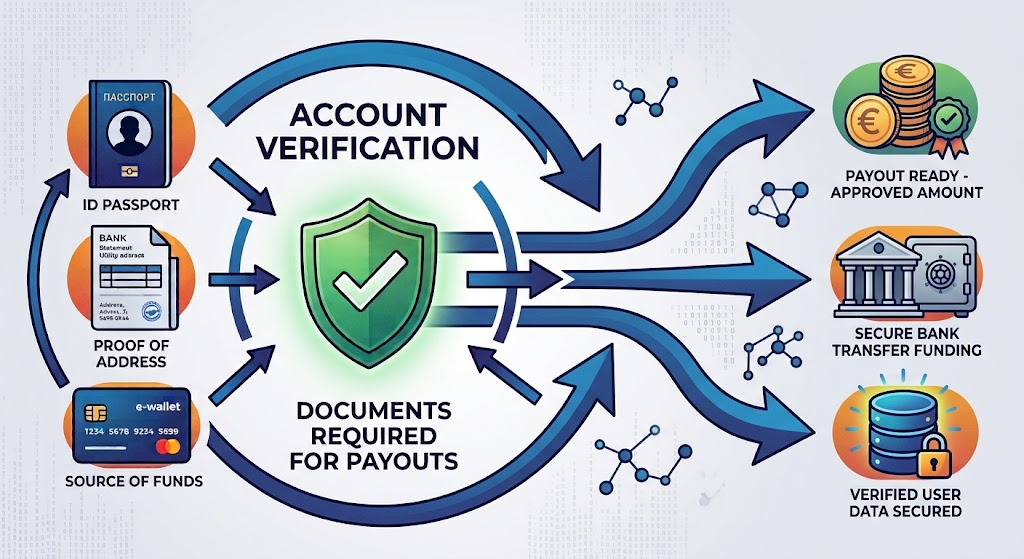
Account verification usually asks for a small, predictable set of documents, and having them ready in advance is the easiest way to avoid delays:
- Government-issued photo ID (passport or national ID card)
- Proof of address, such as a recent utility bill or bank statement
- A photo or scan of the payment method used for deposits
Names, dates of birth, and addresses need to match across every document submitted, since mismatched details are one of the most common reasons a review gets delayed.
Once everything is reviewed and approved, most Pinco withdrawal requests move through the payment queue without further questions.
Understanding Withdrawal Limits and Payout Tiers
Alongside verification, withdrawal limits shape how quickly a big win actually reaches a player, since most operators release large sums in scheduled tiers rather than a single lump payment.
The Malta Gaming Authority’s player protection rules require licensees to remit approved withdrawal requests within a set number of working days, underlining that payout timing is a regulated obligation rather than a courtesy.
Daily, weekly, and monthly caps typically apply to larger balances, and any amount above those caps is usually split across several payout cycles.
Typical caps range from a few hundred dollars a day for smaller accounts to several thousand for verified high-rollers, though exact figures vary by payment provider and licence.
Payment method also plays a role: e-wallets and cryptocurrency transfers tend to clear faster than bank wires, which can take several business days once a large sum is involved.
Keeping betting activity and deposit history consistent with the size of a claimed win tends to speed up manual reviews considerably.

Making the Payout Process Smoother
Large withdrawals are rarely instant, but they don’t have to be stressful either. Players who complete verification early, keep documents on hand, and understand the tiered structure of withdrawal limits generally see their winnings clear without unnecessary back-and-forth.
A well-prepared player, more than a lucky one, is usually the one who cashes out smoothly.

