

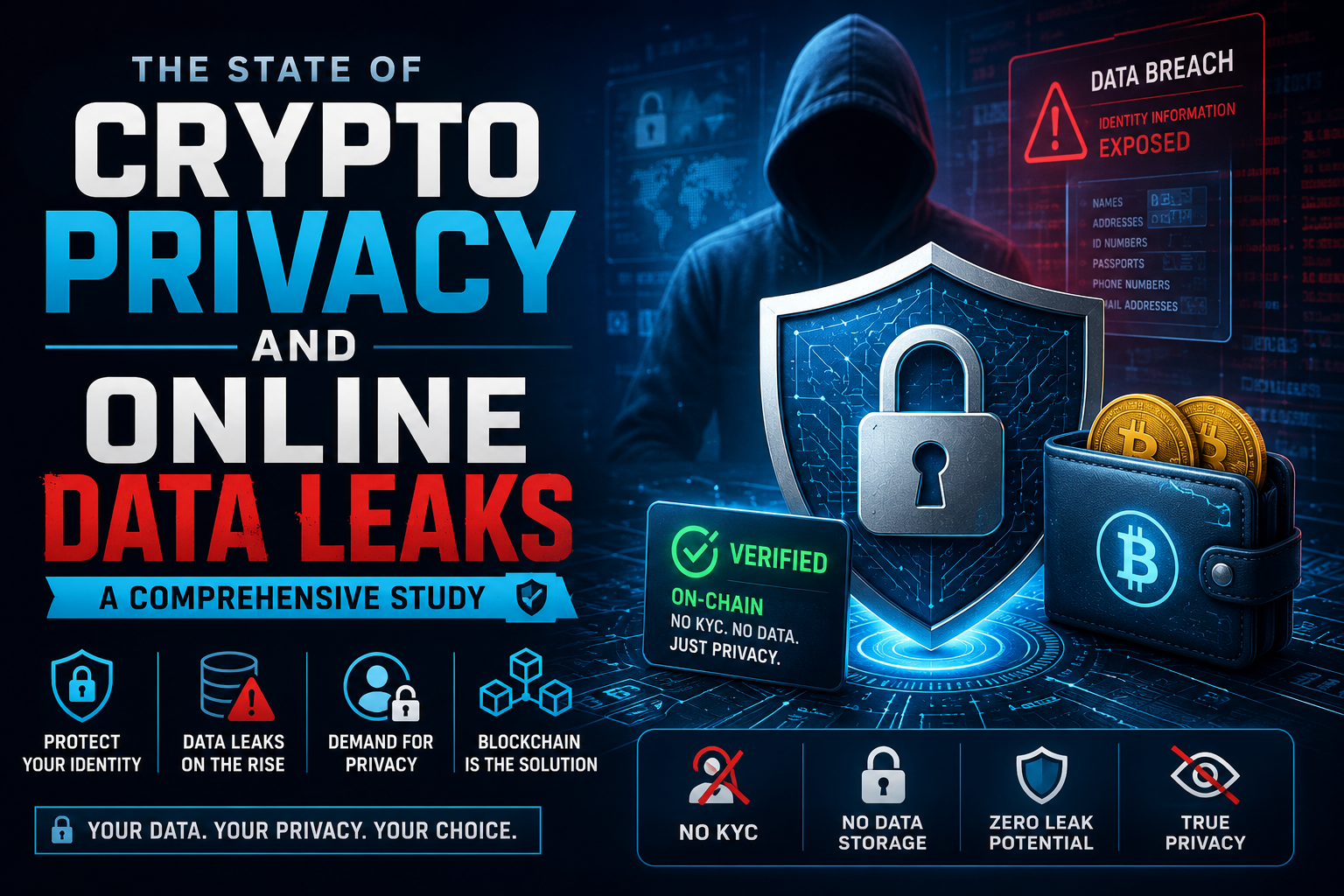
The Cost of the “Safe” Option
If you ask a standard financial platform why they collect your passport, they will tell you it is for security. They say keeping a file of your real name, home address, and face scan makes the platform safe.
But what happens when that platform is hacked?
Suddenly, the files that were meant to protect you are sold on the dark web for pennies. You get a notification that your data was leaked, and your bank accounts are at risk.
This study analyzes the current state of digital privacy, database leaks, and consumer preferences. The data shows a clear trend: centralized identity storage has become one of the single biggest threats to online security. In response, consumer demand for privacy-first, cryptographic services is reaching record highs.
1. The Growth of the Cyber Target List
Database leaks are not rare events. They happen every week.
In the mid–2020s, the number of recorded data breaches surged. Hackers no longer just target credit card numbers—they target full identity packets.
Here is the average dark web value of stolen customer documents, according to cybersecurity market reports:
| Document Type | Average Price on Dark Web | Risk Level to Owner |
| Credit Card Details | $10 – $20 | Low (Banks refund fraud) |
| SSN / National ID Number | $2 – $4 | High (Hard to change) |
| High-Res Passport Scan | $150 – $250 | Critical (Identity theft) |
| Full Utility Bill Scan | $30 – $60 | Critical (Address proof) |
| Selfie with ID Card | $100 – $150 | Critical (Facial recognition bypass) |
When you upload a passport scan and a selfie to a gaming site, you are uploading a package worth over $300 to a criminal. A database of 100,000 users represents a multi-million dollar payout for a hacker group.
2. Why Financial and Entertainment Databases are Targeted
Hackers target online entertainment and gaming databases because they represent soft targets compared to major retail banks. A small gaming platform or sports betting site does not have the multi-billion dollar cybersecurity budget of a multinational bank, yet they collect the exact same KYC files.
Once inside a database, hackers extract the files and package them into “Fullz”—complete sets of name, address, date of birth, ID scans, and security questions.
With these files, criminals bypass the automated verification systems used by banks, phone carriers, and credit services. The victim’s digital footprint becomes a weapon against them.
3. Consumer Sentiment: The Demand for Privacy
As leaks become more common, users are changing their behavior. They are no longer willing to hand over their documents to every website they visit.
Industry surveys on consumer privacy preferences reveal the following:
- 83% of internet users express concern about how companies handle their personal data.
- 67% have abandoned a signup process because a site demanded too much personal information.
- 74% actively seek out payment options (like cryptocurrency) that do not require linking their bank accounts directly to the merchant.
- 58% of online gamers state they would choose a no-verification platform over a traditional site if all other features were equal.
Privacy is no longer just a niche concern for crypto enthusiasts. It has entered the mainstream as a necessary defense mechanism against cybercrime.
4. The Blockchain Defense: Verification Without Storage
The solution to the data leak epidemic is to stop collecting the data.
By using blockchain networks, platforms verify transaction logs rather than player identities. The user proves ownership of their money cryptographically. The platform verifies that the funds have cleared on-chain.
No passport scans are sent. No utility bills are stored on a corporate server.
If the platform is hacked, the hacker finds nothing but a list of public wallet addresses. Public addresses are useless to identity thieves—they contain no names, no locations, and no credit files.
Key Takeaways
- Critical Data Risks: Passports and selfies are the most valuable stolen documents on the dark web, making KYC databases prime targets.
- Security Vulnerability: Entertainment sites collect the same high-value files as banks, but operate with much smaller security budgets.
- Signup Abandonment: Over two-thirds of users drop out of registration when platforms ask for excessive personal details.
- Zero Leak Potential: Cryptographic verification protects both the user and the platform by keeping identity files completely offline.
FAQ
Q: What is a “Fullz” in cybercrime?
A: “Fullz” is a dark web slang term for a complete dossier of an individual’s personal information. It typically includes full name, Social Security Number, date of birth, address, and copies of official identification documents.
Q: Are crypto wallets 100% private?
A: A crypto wallet is pseudonymous. While it does not contain your name, all transactions are recorded on a public ledger. To keep your transactions private, you can use fresh wallet addresses for different deposits and withdrawals.
Q: Why do banks reject gambling transactions?
A: Banks use risk-scoring algorithms. They flag gambling deposits as high-risk, which can lower your internal credit rating or cause compliance departments to block your card, even if you are using your own disposable income.
Q: Can a data leak happen if I only use my email?
A: If a site only stores your email, a leak is low-risk. The worst outcome is receiving more spam or phishing emails. The danger only arises when you upload documents that can be used to impersonate you.

