

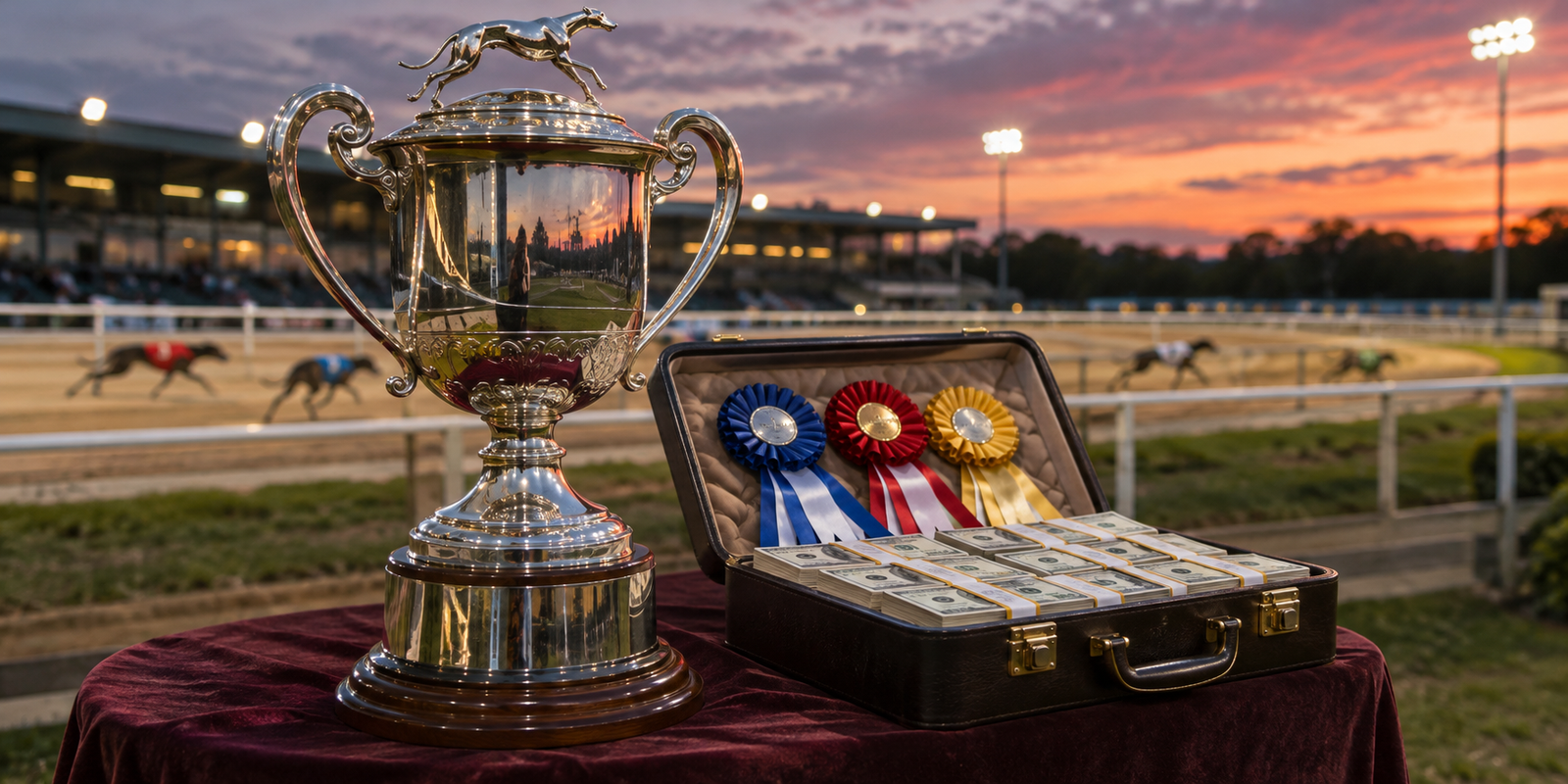
Towcester announced a £224,000 prize fund for the 2027 English Greyhound Derby on 22 October 2026. The winner will collect £125,000 after the final on Saturday, 12 June, matching the first prize paid in 2026.
The opening round starts on 6 May and runs over three nights. The tournament marks 100 years since the first Derby in 1927.
The prize fund covers all six rounds. The greyhound racing odds for a heat concern one race on the card. In the outright market, a dog can keep a ticket alive by qualifying without a win. The outright winner is decided in the final.
The winner’s share and the six-round schedule
The champion’s £125,000 accounts for just under 56% of the fund. That leaves £99,000 for the rest of the competition’s prizes. Towcester gave the overall fund and the winner’s share in its announcement, with the full breakdown by finishing position and round still to come.
| Stage | Date in 2027 |
| First round | 6–8 May |
| Second round | 14–15 May |
| Third round | 22 May |
| Quarter-finals | 29 May |
| Semi-finals | 5 June |
| Final | 12 June |
The dates put the final six days later in the calendar than the 2026 edition, which was decided on Saturday 6 June at the same track. The first two rounds are spread across five nights.
From the third round onwards, the Derby moves to a Saturday schedule, with seven days between each stage. By the time the finalists are drawn, they will have come through five rounds. Each one adds a result to the form book and leaves fewer runners in contention for the outright market.
What the last final showed
Lennies Eddie won the 2026 final at a starting price of 10 to 1. He broke from trap three and led throughout the 500 metres, finishing in 28.20 seconds. Ballymac Deniro, who had won his semi-final in 28.15 seconds, came home second.
The faster of those two times came in an earlier round, against a different field.
At 10 to 1, a £1 win stake settled at that starting price would have returned £11, with the original stake included. The figure relates to the final itself. Outright odds taken earlier in the competition can differ because they cover the entire route to the title.
The 2026 results show why the same piece of form can mean different things for a heat and for the competition as a whole.
- Ballymac Deniro also set the quickest quarter-final time, winning in 28.21 seconds.
- Lennies Eddie finished behind him in that quarter-final and again in the semi-final. Both runs were enough to advance.
- Lennies Tank qualified for the final and was drawn in trap six. His withdrawal left five runners on the night.
There can be a week between a result that changes the outright picture and the next round on the track. A stake on a runner to win the Derby stays part of the amount already committed to the event, even while separate heat markets open.
Keeping those stakes in the same budget helps account for money that is still tied up.
A centenary with a home beyond 2027
Entry Badge won the first Derby in 1927 at White City. The centenary will take place at a track that now has the event through 2031, under a five-year award announced earlier in October.
Towcester also staged the 2026 final, when Lennies Eddie’s victory gave trainer Paul Hennessy a Derby win at a third venue after earlier successes at Wimbledon and Nottingham.
The next details from Towcester will put more of the meeting in view. The venue says it will announce supporting fixtures and ticket information later. For the Derby itself, the calendar already fixes the six stages and the prize at the end of them.
Opening night on 6 May is when the first runners get their chance to start a campaign for that £125,000.

