

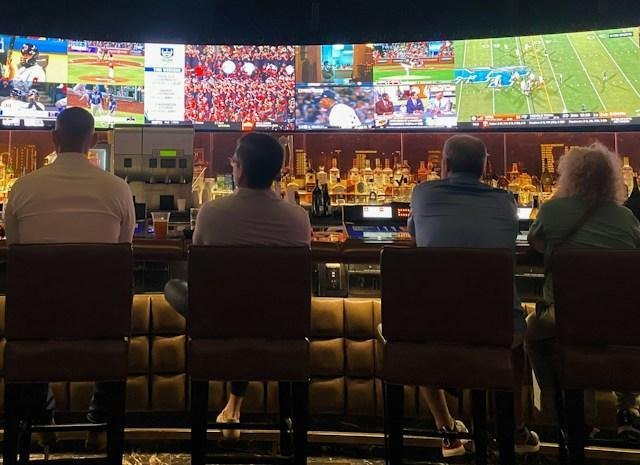
Spread betting takes different forms depending on the sport. American football uses point margins, basketball emphasizes scoring differences, and baseball relies on run lines. Hockey uses puck lines, while soccer offers markets that extend beyond goals into corners and disciplinary statistics.
These differences reflect how each sport unfolds, from football’s frequent stoppages to basketball’s constant scoring. Conventional point spreads use fixed odds and a scoring handicap.
Separately, some sports spread products calculate gains and losses per unit of difference between a quoted figure and the final result. These are distinct products, and availability depends on the operator and jurisdiction.
How Football Turns Every Point Into a Spread Factor
American football suits spread betting because scoring margins can change considerably throughout a game. Touchdowns bring six points, while field goals add three, creating shifts that can affect several markets at once.
For newcomers seeking spread betting explained, the point spread provides a useful starting point. Favorites must win beyond the assigned handicap, while underdogs can cover by winning outright or losing by less than the listed margin.
An exact match on a whole-number spread generally produces a push.
Football’s frequent stoppages also create natural opportunities to assess the contest. Possession changes, injuries and tactical adjustments can influence expectations. Passing and rushing statistics provide additional markets that don’t necessarily depend on which team wins.
Coaching decisions also influence how football spreads develop. Fourth-down attempts, two-point conversions and clock management can alter scoring margins unexpectedly. These tactical choices become particularly important during close contests when every possession carries additional significance.
Popular Betting Markets Found in American Football:
- Point spreads: Apply a scoring handicap, with favorites required to exceed the listed margin.
- Combined totals: Concern the overall number of points scored by both teams.
- Team totals: Focus on the scoring output of one team.
- Winning margins: Concern the difference between the teams’ final scores.
- Player props: Cover individual statistics, including passing and rushing yards.
Basketball’s Fast-Paced Action Keeps Point Spreads Moving
Basketball’s scoring frequency creates a different environment for spread markets. Possessions change quickly, and even substantial leads can disappear during a short attacking run.
Point spreads remain fundamental, with handicaps varying by league and matchup. NBA teams regularly score above 100 points, making winning margins and offensive efficiency particularly relevant.
Pace influences how these markets develop. Faster teams generate more possessions, potentially increasing scoring opportunities. Late fouls, substitutions, and defensive adjustments can also change totals or margins quickly, particularly in closely contested fourth quarters.
Home-court advantage can influence basketball spreads, particularly when travel schedules create fatigue. Back-to-back games may affect defensive intensity and shooting accuracy. Rotation changes also matter, especially when teams rest regular starters during demanding stretches.
Popular Betting Markets Found in Basketball:
- Point spreads: Require the selected team to cover the listed scoring handicap.
- Totals: Concern combined scoring, with lines reflecting expectations around pace and efficiency.
- Player props: Cover individual statistics such as points, rebounds and assists.
- Moneylines: Focus on the outright result under the applicable settlement rules.
These markets may also be available during play. Live prices can change as possessions, scoring runs and remaining time alter the game situation.
Why Baseball’s Run Line Creates a Different Betting Dynamic
Baseball approaches spread markets differently. Instead of a conventional point spread, bookmakers generally offer a run line, typically set at 1.5 runs.
A favorite carrying a -1.5 handicap must win by at least two runs; an underdog receiving +1.5 covers by winning outright or losing by exactly one run.
Starting pitchers strongly influence baseball markets, but conditions matter too. Ballpark dimensions, temperature and wind can affect scoring expectations. The quoted total varies with the matchup, reflecting expectations around pitching, ballpark conditions and overall scoring.
Popular Betting Markets Found in Baseball:
Run lines provide baseball’s handicap equivalent, usually using a 1.5-run margin. Moneylines concern outright results and reflect pitching matchups. Totals measure combined runs, with venue conditions influencing expectations.
Strikeout and total-base props provide individual statistical markets, while alternative run lines offer different winning-margin thresholds.
The Fine Margins That Shape Ice Hockey Spread Betting
Ice hockey’s relatively low scoring makes individual goals particularly influential. A single defensive mistake or power-play opportunity can change both the result and the handicap outcome.
The puck line functions as hockey’s spread equivalent. A team at -1.5 must win by at least two goals. A team at +1.5 covers by winning outright or losing by one goal.
NHL insights show that goaltending and special teams also influence scoring expectations. Penalties can create temporary attacking advantages, while strong goaltending can keep matches close despite sustained pressure. Empty-net situations occasionally change winning margins late in games.
Popular Betting Markets Found in Ice Hockey:
Totals commonly sit between five and 6.5 goals, depending on the matchup. Period markets focus on individual segments, while alternative puck lines and totals provide different thresholds. Moneylines remain available for outright outcomes, including overtime under applicable rules.
Exploring Soccer Spread Markets Beyond Goals and Results
Soccer offers both conventional fixed-odds handicaps and sports spread products with variable settlement. Its continuous play and relatively low scoring make individual goals significant to both types of market.
A conventional goals total might use a line of 2.5. Variable-settlement sports spread products instead use separate buying and selling quotations, with the final goal count determining settlement.
Other markets examine corners, disciplinary points and winning margins. Bookings points follow the provider’s published scoring rules, including how different cards are counted. A late goal can change the settlement of a goals or supremacy position.
Popular Betting Markets Found in Soccer:
Total goals markets track match scoring, while corners measure attacking pressure. Bookings points reflect disciplinary events. Supremacy markets examine the winning margin, and match indexes assign values to outcomes.
Unlike conventional fixed-odds handicaps, these sports spread products calculate gains and losses according to the distance from the accepted quotation.
Why Each Sport Produces Different Markets
Spread markets reflect each sport’s scoring patterns, from point margins in football and basketball to run lines in baseball and puck lines in hockey. Soccer also offers goals, corners and disciplinary markets.
Conventional fixed-odds spreads generally settle as a win, loss or push, while variable-settlement sports spread products calculate gains or losses from the difference between the accepted quotation and the final result.

