


Slot vs Crash Games: Key Differences
Online casino gaming encompasses diverse formats appealing to different player preferences. Slots and crash games represent two distinct categories often confused by newcomers despite fundamental mechanical differences. While both involve wagering with uncertain outcomes, their player interaction levels, pacing, and psychological impacts differ significantly. Understanding these distinctions helps players make informed decisions about format selection and risk management strategies.
Slot Games: How They Work
Slot games operate through Random Number Generator (RNG) algorithms, producing outcomes independent of previous spins or player actions. Each spin represents an isolated event with predetermined probabilities established by game developers. Players select bet sizes and activate spins, with symbols landing in patterns determining outcomes. The software calculates results before visual reels finish spinning—animated displays serve purely aesthetic purposes.
Return to Player (RTP) percentages indicate theoretical long-term payback rates, typically ranging from 94-97%. Games like Fortune Tiger demonstrate standard slot mechanics where RTP determines expected losses over extended sessions. Volatility levels categorize slots as low, medium, or high variance—low volatility provides frequent small wins, while high volatility offers rare but substantial payouts. Players exercise zero influence over outcomes beyond bet size selection. Mathematical house edges ensure casino profitability regardless of short-term variance.
Top Slot Games:
- Fortune Tiger
- Gates of Olympus
- Sweet Bonanza
- Book of Dead
- Big Bass Bonanza

Crash Games: Mechanics and Risk
Crash games introduce timing-based mechanics where multipliers increase from baseline values until randomly crashing. Players place bets before rounds begin, watching multipliers climb in real-time. The critical decision involves cashing out before crashes occur—exiting at 2.5x secures 2.5x stake returns, while crashes before cash-out result in total losses. This format creates illusions of control through active participation.
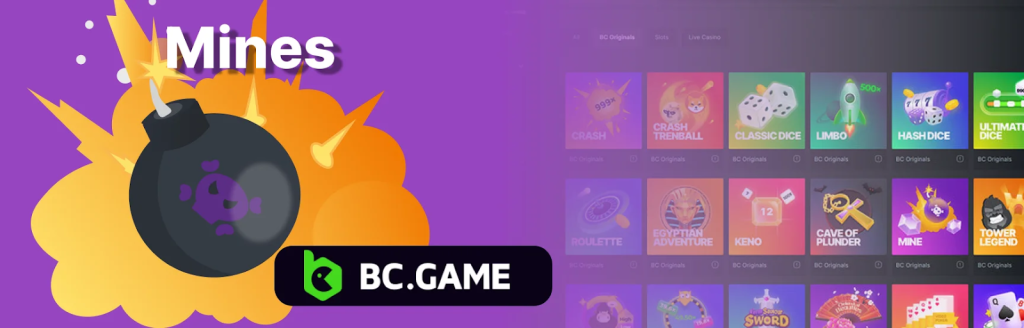
Provably fair technology distinguishes many crash games from traditional formats. Platforms like BC Game Mine implement cryptographic verification, allowing players to confirm outcome randomness through seed inspection. Server seeds, client seeds, and nonce values are hashed together, producing verifiable results impossible to manipulate after bets are placed. Despite this transparency, mathematical house edges persist, and crash points are distributed according to a predetermined probability curve,s ensuring long-term casino profitability.
The sensation of control differentiates crash games from passive slot experiences. However, this agency proves that illusory crash probabilities remain fixed regardless of timing strategies. A 1% house edge means players lose 1% of wagered amounts over sufficient volume, whether through poor timing or optimal strategies.
Top Crash Games:
- BC Game Mine
- Aviator
- Limbo
- Crash
- Dice
Key Differences Between Slots and Crash Games
Player participation levels represent the primary distinction between formats. Slots require minimal interaction—players select stakes and activate spins, with outcomes materializing passively. Crash games demand continuous attention and active decision-making throughout each round. Game speed varies significantly: slot spins complete within 3-5 seconds, enabling rapid-fire gameplay, while crash games feature longer rounds ranging from 10-60+ seconds depending on crash points. These fundamental differences affect hourly loss rates, emotional engagement, and perceived control over outcomes.
| Aspect | Slots | Crash Games |
| Player interaction | Minimal select stake and spin | Active, continuous cash-out decisions |
| Game speed | 3-5 seconds per spin | 10-60+ seconds per round |
| Risk control | Limited to bet size; volatility predetermined | Illusion of control through cash-out timing |
| Emotional engagement | Low to moderate; passive watching | High adrenaline-driven decision-making |
| Session pacing | Rapid-fire gameplay | Variable pacing with tension buildup |
| Skill perception | None purely luck-based | False perception of skill in timing |
| Mathematical reality | Fixed RTP/house edge | Fixed house edge despite active choices |
Psychological Factors and Player Behavior
Crash games exploit cognitive biases through illusions of control. Players attribute wins to skillful timing while dismissing losses as bad luck or premature cash-outs, reinforcing continued play despite mathematical realities. Active participation creates stronger engagement than slots’ passive nature, potentially encouraging longer sessions and higher wagering volumes.
Slots benefit from perceptions of safety and simplicity. The lack of decision-making beyond stake selection reduces cognitive load, making slots accessible to casual players. However, this simplicity masks identical mathematical disadvantages – house edges ensure losses regardless of format.
Near-miss phenomena affect both formats. Slot near-misses occur when symbols land one position away from winning combinations. Crash games generate near-miss sensations when crashes occur immediately after intended cash-out points. Both mechanisms exploit psychological vulnerabilities, encouraging extended play beyond rational stopping points.
Bankroll Management Considerations
Effective bankroll management proves more critical than format selection. Both slots and crash games feature mathematical house edges, ensuring long-term losses. The primary variable involves the loss rate. Rapid-play slots cycling dozens of bets per hour accelerate bankroll depletion compared to slower crash games, though impulsive crash behavior can negate this advantage.
Stake sizing requires different approaches. Slot players should limit spins to 1-2% of their total bankrolls. Crash game players face additional considerations regarding target multipliers. Conservative 1.5-2x targets enable frequent small wins but accumulate losses through house edge exposure, while aggressive high-multiplier strategies risk rapid depletion.
Session time limits provide more effective protection than win/loss limits alone. Setting maximum durations regardless of current profit/loss status prevents emotional decisions during winning streaks or chase behavior during losses. Mental accounting separating gambling budgets from essential expenses proves critical regardless of format.
Slots vs Crash
Slots and crash games offer distinct experiences. Slots provide passive RNG-determined entertainment, while crash games introduce active participation, creating illusions of control, though both formats feature mathematical house edges guaranteeing long-term losses. Format choice should reflect entertainment preferences rather than profit expectations, as effective bankroll management and disciplined session controls prove far more impactful than game selection. Understanding these distinctions enables informed decisions, reducing harm potential while maintaining entertainment value within budget constraints.

